A frame nobody could ever check
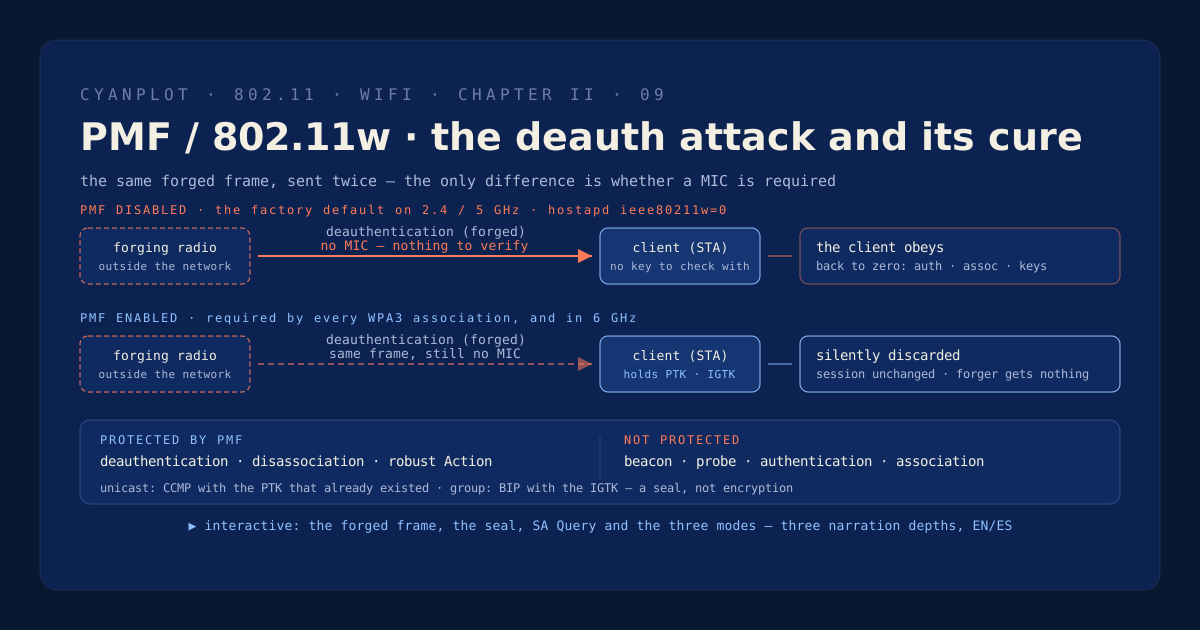
The original 802.11 design is a sequence of states: a station authenticates, then associates, and only then do keys exist. Everything that happens before that has to travel in the clear, because there is nothing yet to protect it with — and everything that advertises the network has to be readable by strangers, since a stranger is precisely who is trying to join. A deauthentication frame lives in that world: it is a notification rather than a request, it carries no integrity check, and the only identifiers it needs are visible in every frame on the channel.
The consequence is not a defect in any product. Anyone within radio range, with a card that can inject, can produce a frame that says the connection is over. And the disconnection is often a means rather than an end: Wi-Fi Alliance documents that forced reconnections are used to speed up offline dictionary attacks against the passphrase, and to steer clients toward an access point under someone else's control.