netviz

802.11 · WiFi

WPA2-Enterprise 802.1X, EAP and the RADIUS server

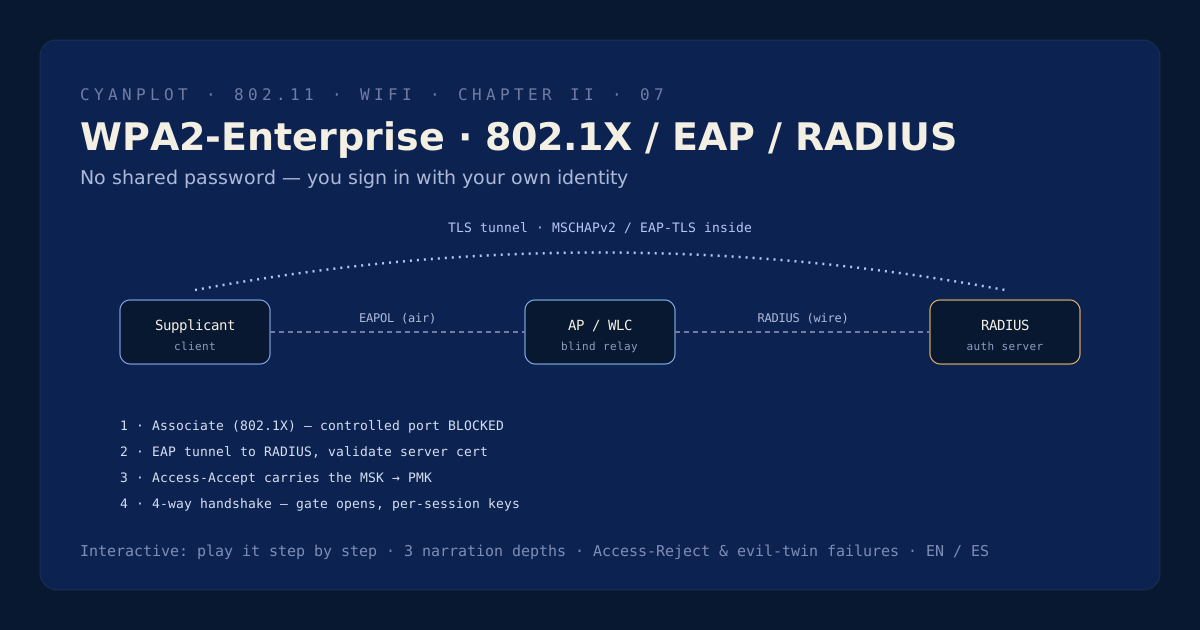
On a corporate network there is no shared Wi-Fi password — you sign in with your own identity. Watch the supplicant, the AP and the RADIUS server build a sealed TLS tunnel, prove who you are inside it, and only then derive per-session keys. See exactly why a missing server-certificate check is the whole ballgame.

Sequence diagram poster of the WPA2 4-way handshake

Requesting scene from the content service…

3 roles
the 802.1X cast
MSK
per-user PMK source
PEAP / EAP-TTLSRADIUS serverTLS tunnelevil twin

What you'll learn

  • The three 802.1X roles — supplicant, authenticator, RADIUS server — and why the AP is a blind relay.
  • How PEAP/EAP-TTLS build a server-authenticated TLS tunnel before any credential travels.
  • Why the PMK comes from the RADIUS MSK (per-user, per-session), not from a shared password.
  • How the evil-twin attack steals credentials when the supplicant doesn't validate the server cert.

Authentication before the handshake

WPA2-Personal derives its master key from a password everyone shares; WPA2-Enterprise derives it from a real sign-in. The client associates with 802.1X, but the controlled port stays blocked until EAP succeeds: a TLS tunnel forms against the RADIUS server's certificate, the inner method (MSCHAPv2 or a client certificate) proves identity, and RADIUS returns Access-Accept carrying the Master Session Key.

The access point turns the first 256 bits of that MSK into the PMK and runs the same 4-way handshake as the home-network plate — but now every client holds a unique, per-session key. This plate also walks the two ways it goes wrong: an Access-Reject from bad inner credentials, and the evil-twin attack that harvests credentials whenever the supplicant skips server-certificate validation.

Atlas index